Key Takeaways
- High-contrast combinations, such as dark exteriors with white trim, create a modern and sophisticated appearance.
- Warm neutrals and earthy shades offer a natural look that complements different architectural styles.
- Accent colors on front doors, window frames, and architectural features add personality and visual interest.
- Combining painted surfaces with natural wood finishes creates warmth and texture.
- Proper surface preparation, suitable paint finishes, and careful application help improve durability and appearance.
- Testing color samples in natural light and checking local guidelines can help prevent costly painting mistakes.
Your home’s exterior plays an important role in its overall appearance, creating a first impression for visitors, neighbors, and potential buyers. Over time, exposure to sunlight, rain, and changing weather conditions can cause paint to fade, peel, or look outdated. Choosing the right colors can refresh the facade, highlight architectural details, and improve curb appeal without requiring major renovations. Modern exterior paint ideas offer a variety of options, from bold contrasts and sophisticated dark shades to warm earth tones and carefully chosen accent colors. By considering your home’s architectural style, surrounding landscape, and existing materials, you can select a color scheme that looks attractive and remains practical over time.
Ditching Traditional Neutrals for High-Contrast Modernity
For decades, beige, off-white, and pale tan dominated suburban streetscapes. Today, modern architecture embraces contrast.
High-contrast color schemes create sharp lines and architectural interest, highlighting the unique shape and features of your home.
One of the strongest trends in modern exterior design is the dark facade. Deep charcoal gray, midnight blue, rich navy, and soft black (such as iron or dark slate) give homes a sleek, upscale appearance. Dark body paint pairs beautifully with crisp white trim, natural wood elements, and brushed metal hardware. Far from looking dreary, dark exteriors feel grounded, dramatic, and sophisticated.
Conversely, if you prefer a light exterior, move away from yellow-tinged creams and opt for clean, cool white or soft alabaster. Combine a light main color with dark window casings, black gutters, and charcoal fascia boards. This high-contrast look borrows heavily from modern farmhouse and modern industrial aesthetics, turning simple lines into bold visual statements.
Warm Neutrals and Organic Earth Tones
If dramatic black or bright white feels too severe for your neighborhood, modern organic earth tones offer a soft, welcoming alternative. The modern earth-tone palette moves past basic brown into rich, complex shades that blend seamlessly with natural landscaping.
Greige—a tailored mix of gray and beige—remains a popular choice because it adapts effortlessly to changing sunlight throughout the day. Dusty sage greens, muted terracottas, warm taupes, and soft slate blues bring natural warmth to siding and stucco. These mid-tone shades look particularly striking on mid-century modern homes, ranch-style layouts, and Craftsman houses, bridging the gap between historical charm and contemporary design.
To keep earth tones looking modern rather than dated, avoid pairing them with brown trim. Instead, use clean off-white or dark bronze accents around windows, garage doors, and rooflines to sharpen the overall silhouette.
Strategic Accents and Focal Points
You do not need to paint every square foot of your exterior in a bright color to make a statement. In modern design, vibrant color is applied strategically to guide the eye toward key architectural features.
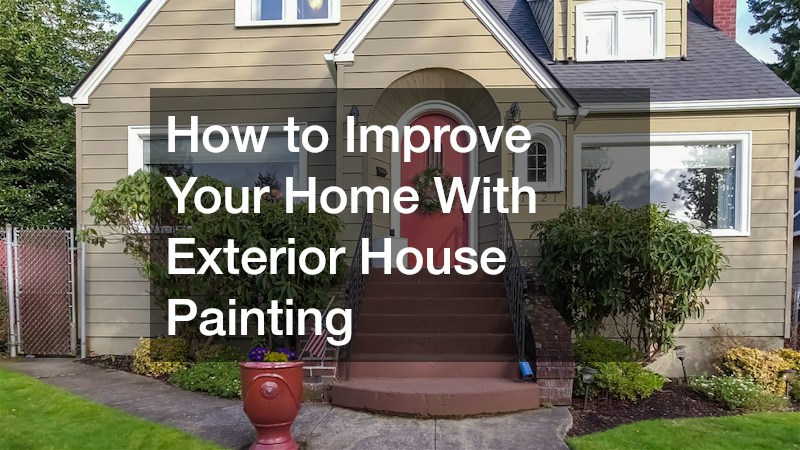
- The Front Door: Your entry door is the ultimate spot for a punch of personality. Modern favorites include cheerful mustard yellow, rich forest green, deep plum, bright cyan, or glossy cardinal red. A vivid front door draws visitors in and creates an instant focal point against a neutral body color.
- Architectural Bump-Outs: If your home features gables, dormers, cantilevered sections, or mixed materials like siding and board-and-batten, paint these zones a shade lighter or darker than the primary wall color. This subtle tone-on-tone shift adds depth and dimension.
- Window Trim and Casings: Painting window frames in a darker shade than the body creates the illusion of larger, custom windows. Black or dark bronze trim instantly modernizes dated vinyl or wood window surrounds.
Mixing Textures with Paint and Wood Stains

Modern facades rarely rely on a single texture. Combining painted surfaces with natural wood accents creates warmth, balance, and architectural richness.
Consider painting your main body and trim in a crisp, dark neutral, then adding warmth with warm cedar or walnut stains on garage doors, front porch ceilings, or entry overhangs. If replacing siding with real wood is outside your budget, high-performance exterior wood stains applied to existing wood trim, cedar shakes, or porch columns achieve a similar high-end look at a fraction of the cost.
Getting the Application Right
A modern color scheme only looks as good as its execution. Modern palettes—especially high-contrast whites, deep blacks, and rich accent colors—demand precise lines, thorough surface preparation, and flawless application.
Flaking paint, unsealed gaps, and uneven coats are especially noticeable with dark hues. Working with professional painting contractors ensures that siding, trim, and masonry are power-washed, scraped, repaired, and primed correctly before any finish coat is applied. Proper prep work prevents premature peeling and keeps your new color looking fresh through harsh winters and blazing summer heat.
Updating your home’s exterior with the right paint colors can make a noticeable difference in its appearance and overall character. Whether you prefer dramatic dark shades, soft neutrals, natural earth tones, or colorful accents, the best choice should complement your home’s architecture and surroundings. Pay attention to details such as front doors, window trim, wood finishes, and the paint finish used on each surface. Proper preparation, suitable exterior paint, and careful application are equally important for achieving a durable, professional-looking result. Before committing to a full exterior repaint, test color samples in different lighting conditions and check any applicable neighborhood guidelines. With thoughtful planning and regular maintenance, you can create an attractive facade that stays welcoming and well maintained for years.